Promotional products work because they sneak your brand into someone’s day. Not with a shout, but with usefulness. Done right, a giveaway can turn a quick booth chat into an actual conversation later—because it delivers a small bit of utility, a spark of delight, and a reason to follow up. And yes, it should also carry a feeling: comfort, momentum, a sense of “these are my people.” The best pieces keep selling for you long after the carpet’s rolled up.
1) Why aren’t my trade show giveaways generating qualified leads?
If the swag is flying off the table but your pipeline isn’t, it’s probably the strategy, not the object.
- Wrong magnet: If the item doesn’t match your ideal customer profile, you’ll attract freebie hunters, not buyers. A universal trinket fills the aisle, sure, but it won’t filter for people who actually need what you sell.
- Low perceived value: Cheap-feeling or irrelevant stuff makes your brand feel… cheap. Worse, flimsy items that break on day one hurt trust. Quick gut check: would your best customer choose to keep this?
- Frictionless handouts = anonymous impressions: If you’re handing things out without an action—scan to redeem, book a demo to unlock, join a micro-session to pick up—you’re paying for ghosts. Tie the item to a behavior and qualification goes up immediately.
- Weak follow-up: No same-day outreach? No tailored reference to the item or the booth moment? The memory fades. Pair your giveaway with a scannable link that lands on a relevant page, and have sequences queued. Quality swag + a clean next step is how crowds become pipeline.
2) Best trade show giveaways to attract booth visitors in 2026 (by budget, audience, industry)
The winners blend everyday usefulness with a clear brand story. Below are proven picks, with typical mid-quantity 2026 ballpark pricing. Freight and materials can swing, so treat these as ranges, not promises.
Budget $1–$3
- Audience: Students, field staff, high-volume traffic
- Industries: Education, logistics, retail, public sector
- Examples: Recycled-paper notebooks; wheat-straw or recycled-plastic pens; seed-paper badges; cable wraps
- Why it works: High utility, eco-forward story, easy to distribute; pairs nicely with a quick scan capture
Budget $3–$10
- Audience: Developers/IT, analysts, operators
- Industries: Software, manufacturing, fintech
- Examples: Privacy screen filters; microfiber kits; USB-C fast cables; badge-reel multitools; RPET totes
- Why it works: Daily “work tools” that show you get their world; strong keep rates
Budget $10–$25
- Audience: Managers, technical buyers
- Industries: Healthcare, SaaS, energy
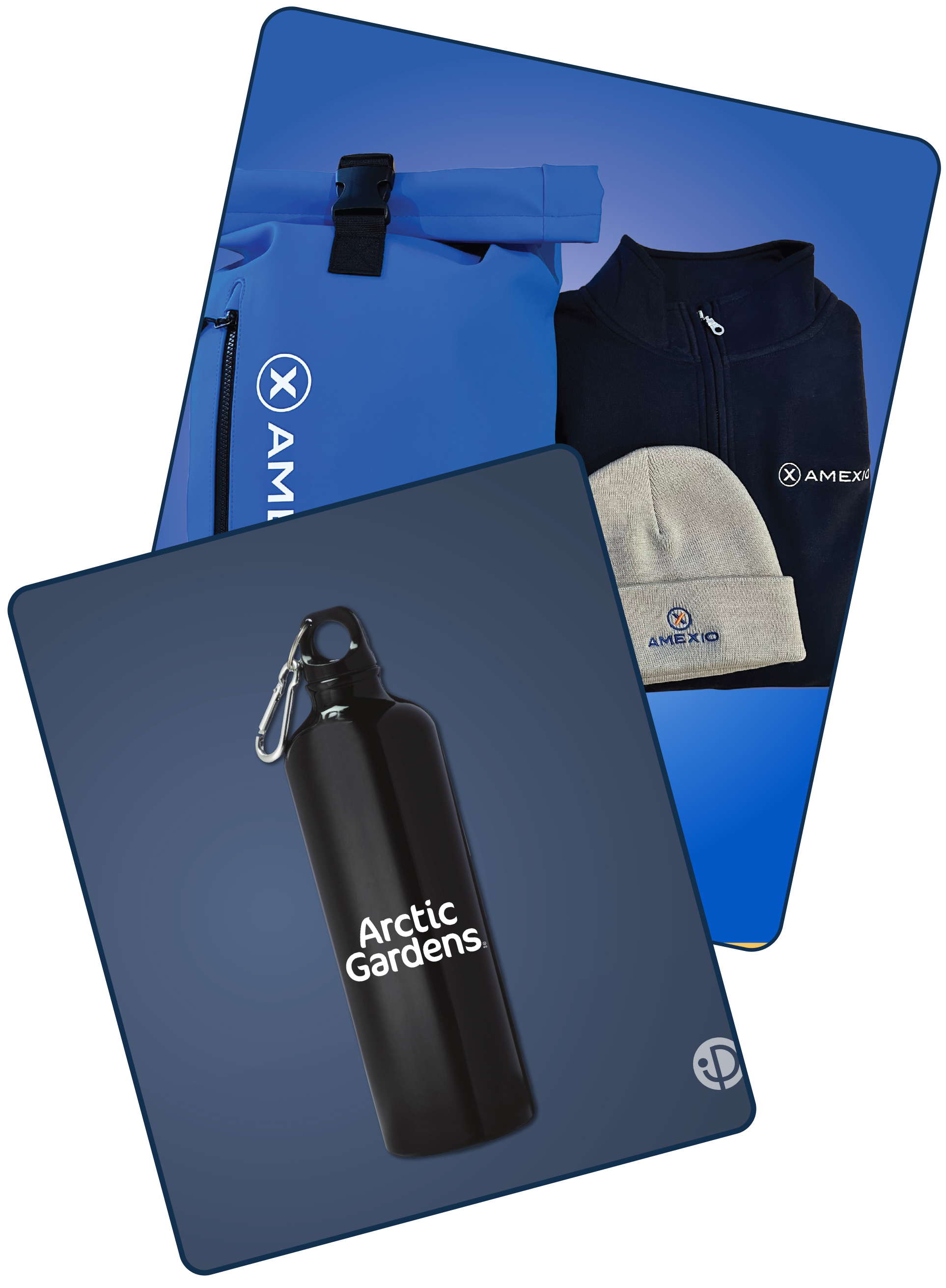
- Examples: Collapsible silicone cups; wireless charging pads; compact power banks; premium socks; insulated drinkware
- Why it works: Mid-tier delighters; great as demo-completion rewards or for scheduled meetings
Budget $25–$75+
- Audience: Executives, high-value prospects
- Industries: Enterprise tech, finance, medtech
- Examples: Noise-canceling earbuds; branded backpacks; smart notebooks; travel tech kits
- Why it works: Reserved for pre-booked meetings or qualified accounts; memorable with high perceived value
Mix your tiers. Offer an easy handout for casual passerby, a mid-tier piece for meaningful scans or micro-demos, and a premium gift for scheduled meetings. Add one or two fun, photogenic items tied to your theme (a small desk toy, a tasteful novelty) to create buzz—but keep your core inventory useful. For tech crowds, custom tech giveaways like USB-C hubs, GaN chargers, or tidy cable kits still win because they solve real problems and sit on desks for months.
3) How to choose branded promotional products that fit your brand and your buyer
- Start with their workday: On the road a lot? Prioritize portability and durability—compact drinkware, cable organizers, travel-friendly hygiene kits. Office-based or technical? Items that declutter and focus—privacy filters, charging solutions, smart notebooks—see daily use.
- Match your story (and feeling): Sustainability-focused brands should skip plastic-heavy throwaways and use low-impact materials with real certifications. Reliability/performance brands should lean on longevity and consistency, not cute gadgets that break. Ask: what feeling should this object leave behind—calm, confidence, momentum, craft?
- Set a quality floor: Fewer, better items beat a pile of forgettable ones. Ask for samples and stress-test them yourself—plug the charger, wash the cup, write with the pen. If it fails you, it’ll fail them.
- Make it a bridge: Use a small card, smart packaging, or a short link leading to a 30-second explainer, a quick personalization quiz, or a calendar page. Keep the handoff simple so attribution isn’t guesswork.
- Plan for portability and policy: People travel light. Keep it packable and check venue rules for batteries, magnets, or liquids. In regulated industries, stay compliant and tasteful—subtle branding often beats loud logos for execs and healthcare pros.
- Regulated sectors (important): Many teams have strict gift caps (e.g., US federal government often ~$20 per occasion/$50 per year; healthcare and finance can be tighter). When in doubt, default to under-$20 items, document recipients, and get pre-approval from compliance/legal.
4) Eco-friendly promotional products for events: sustainable ideas with pricing and MOQs
Sustainable can be sharp if you vet materials, supply chain, and end-of-life. In 2026, you’ve got options:
- Recycled- or stone-paper notebooks with soy inks: about $2–$4 at 250-unit MOQs; good story on water use reduction.
- Wheat-straw or recycled-plastic pens: roughly $0.45–$0.75 with 500-unit MOQs; perfect for high-volume handouts that still feel responsible.
- Plantable seed-paper badges or postcards: around $0.60–$1.20 with 250-unit MOQs; delightful after-show action and can double as a redemption token at the booth.
- RPET tote bags (recycled bottles): near $1.80–$3.50 with 200-unit MOQs; big branding area, tons of reuse.
- Bamboo utensil sets with travel cases: about $3–$6 at 100+ units; resonates with folks cutting single-use plastics.
- Collapsible silicone cups (with lids/sleeves): $6–$12 at 100–250 MOQs; choose food-grade silicone and minimal packaging.
- Refillable metal pens with replaceable cartridges: typically $2.50–$5 at 100-unit MOQs; sends a quiet longevity signal.
- “Greener” tech: USB-C cables made with recycled materials at $3–$6; responsibly sourced solar power banks at $18–$35 with 50+ MOQs; include a clear usage guide so they don’t end up in drawers.
Ask suppliers for FSC (paper), GRS (recycled content), and OEKO-TEX (textiles). Request minimal or plastic-free packaging, batch shipments to avoid partials, and steer clear of last-minute air freight that spikes carbon. A tiny “care and repair” line on the insert extends the item’s life and reinforces your values.
5) What ROI to expect from branded merch at trade shows
ROI has two parts: the immediate lead gen and the long-tail impressions.
- Long tail: For keepers, cost per impression is usually a fraction of a cent. Pens and bags rack up thousands of looks over their life, often beating digital CPMs. Drinkware and apparel do well too because they’re used constantly.
- Near-term pipeline math (simple, telling):
- Buy 500 mid-tier items at $8 = $4,000
- 320 attendees scan to claim
- 120 complete a 3-minute demo
- 35 accept a follow-up meeting
- 8 become opportunities, average $40,000 deal size
- One closed deal? You’re at 10x+ on gift cost alone. Two over the next quarter? 20x. And that’s before the brand lift from hundreds of keepers out in the wild.
Protect ROI by tiering:
- $2–$3 open handout to start conversations.
- $10–$25 reserved for qualified actions (demos, scheduled meetings).
- $50+ only for pre-booked enterprise accounts or exec briefings where deal sizes justify it.
Always tag your links with campaign codes and log redemption actions so you can tie items to meetings and revenue in your CRM. One caution: attribution is messy. Someone might spot your tote, visit your site later, then convert after a webinar. A quick post-event survey—“What reminded you of us?” with an option like “saw/used the [item]”—often surfaces the hidden lift.
Roll it into your broader campaign:
- Build an audience from booth scans and run light retargeting (helpful content > hard sell) for 2–4 weeks.
- Drop recipients into a short nurture that references the item and the problem you solve; route high intent to sales fast.
- For named accounts, mirror the gift in ABM touches (e.g., send a second charger to a teammate with a note) so the story continues.
6) Supplier and logistics checklist (the unglamorous stuff that actually saves you)
Samples and proofs:
- Get physical samples for anything over $3.
- Insist on a pre-production proof for complex imprints or color-critical logos.
- Lock Pantone matches in writing; confirm imprint size, placement, orientation.
- For electronics, ask for compliance docs and warranties.
Timelines (start earlier than you think):
- Domestic production: typically 5–10 business days after proof approval.
- Decorated imports: 15–30+ days plus transit.
- Add buffer for reprints or customs. Avoid rushed air freight if you can.
- Kitting multiple items? Add days for assembly and QC.
Kitting and inserts that do marketing:
- Include a small card that explains the item’s value, links to a campaign-tagged page, and offers a next step.
- Keep packaging minimal, recyclable, and lightly branded.
- Tiered gifts? Use color-coded cartons so staff follow rules without thinking.
Shipping that doesn’t give you a heart attack:
- For big shows, ship to the advance warehouse—more reliable than direct-to-show-site, though fees may apply.
- International: clear commercial invoices, harmonized codes, broker plan; avoid batteries if possible.
- Label outer cartons with event name, booth number, and an internal contact. Put a packing list in every master carton.
On-site flow (so your booth doesn’t clog):
- Store inventory close by; allocate daily counts; schedule midday and end-of-day top-ups.
- Train staff on who gets which tier and how to redeem via your capture method.
- Make redemption part of the conversation, not an afterthought.
- A small, visible pickup zone with quick scans keeps things moving.
Leftovers and follow-up:
- Have a reuse plan: field sales drops, customer thank-yous, direct mail kits.
- Post-show, trigger tailored sequences referencing the item (“Quick setup tip for your charger” or “Your seed badge likes bright light”).
- Route high-intent leads to sales with notes from the booth.
Protect the brand:
- Inspect deliveries on arrival.
- Keep a few VIP spares.
- Maintain a simple back-up item in case a shipment slips.
- For regulated industries, keep a gift log by recipient and value.
The goal isn’t to hand out stuff. It’s to create a useful, memorable touch that opens the door to real conversations—and a feeling that sticks to your name.
When you combine relevant selection, a clear conversion path, and crisp logistics, giveaways stop being trinkets and start acting like a high-performing media channel. Mix a little buzz (a couple of fun promotional products), real daily utility (sturdy custom tech giveaways), and selective branded novelty (for the story). You’ll pull the right people to the booth—and turn event moments into measurable outcomes.
Next step: pick your three tiers, request samples this week, and map the redemption-to-follow-up flow. If you want the planning templates we use (tier map, vendor checklist, post-show emails), grab them and book a quick 20-minute working session to lock your plan.